
All Candidates Meeting
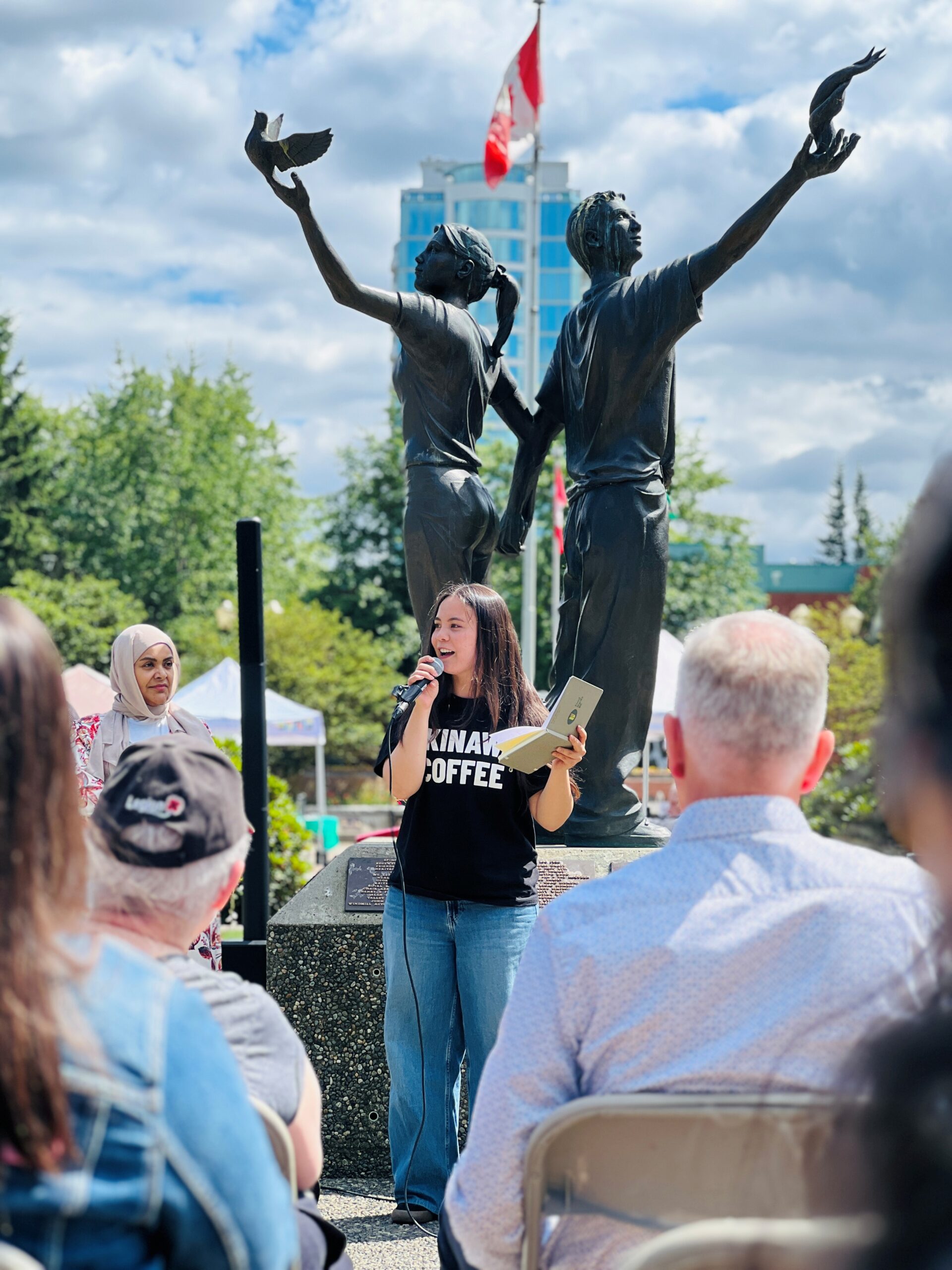
On October 5th, 2026, Archway Community Services hosted an All-Candidates Meeting for community members to hear from 16 Abbotsford City Council candidates discuss food security priorities and share their ideas for strengthening our local food system and explore how we can work together to ensure everyone in our community has access to the food they need.
Topics discussed included:
- The City’s role in food insecurity
- Food recovery and waste reduction
Important Voting Dates
- Advance voting: October 7th, 10th, and 11th
- General: October 17th
Learn more about voter eligibility and identification, candidates, and voting opportunities at www.abbotsford.ca/elections.
Your content goes here. Edit or remove this text inline or in the module Content settings. You can also style every aspect of this content in the module Design settings and even apply custom CSS to this text in the module Advanced settings.
Candidate Responses to Questions
The City’s role in food insecurity
- Food insecurity is strongly connected to household income and the cost of living, but municipalities still influence land use, transportation, community facilities and local partnerships. What is one action you would personally champion during your term to reduce barriers to food access and how would you measure success?
Optional neutral follow-up: What can the City do within its own authority, rather than simply asking another level of government to act?
Patricia Ross: Food Insecurity is a very big problem requiring communicating and partnering with multiple agencies and levels of government. 7 of the 9 members of council sit on the Fraser Valley Regional District (FVRD) board and I am the Chair. It encompasses all the communities from Abbotsford east to Boston Bar. There are many programs that we work with them on planning like AQMP, SWMP and regional growth strategic planning, all of which affect food security. If you want action on an issue, you first have to raise awareness that it is one and work with others on solutions. The FVRD identified food security as one of our top priorities for advocacy.
Air pollutants can reduce crop production by up to 30% and affect the health of livestock as well as human health. This is not only an economic hit to the farmers, but to our food security, health (we have the highest asthma levels in Canada) and food supply for a growing population.
We have a very unique and sensitive airshed that needs constant monitoring and protecting. I’ve spent my whole career identifying large polluting threats to our sensitive airshed, and either stopping them from being built, (such as SE2 and Metro Vancouver’s 6 garbage incinerators) or working with them to use the best available technology to reduce them and many other efforts to reduce our pollution. 58% of our smog forming pollutants come from Metro Vancouver and 24% from the US. We only generate about 17% so this means constantly monitoring not just what we are doing, but what these areas are proposing, identifying threats and advocacy to stop them.
Another policy I’m proud of is that when an applicant asks for support to take land out of Agricultural Land Reserve, or make adjustments, whereas most communities have a criteria that they must prove no net loss to agriculture, the city of Abbotsford asks for better – that they must show a net benefit.
Rupi Kanda-Rajwan: My one action would be to champion a mobile food education and connection initiative that brings practical food knowledge directly into our neighbourhoods.
The Abbotsford Food Charter talks about education, culture, social equity, agriculture and sustainability, health and wellbeing, and community economic development. I think we have an opportunity to bring those ideas together in a very practical way.
When I owned my daycare, a couple of times I worked with my families and organizations and we made sandwiches for people experiencing homelessness. Before taking my littles out, I explained that the people they met might look different, smell different or speak differently. But their job was simple: smile and offer them a sandwich. One gentleman said, “I don’t want one.” One of my littles smiled and said, “But I made it for you.” He took it. I still remember that because food can create connection without judgement.
At the March 10 Council meeting, education was also highlighted during the Food Charter discussion—helping residents understand what they can actually do with the food available to them. I would build on the work already happening rather than duplicate it.
Let’s pilot four pop-ups in four different areas of Abbotsford, from Barrowtown to West Abbotsford. Bring farmers, local businesses and community organizations together.
Teach residents what is in season, how to preserve or freeze food, how to reduce waste, and introduce foods and recipes from different cultures. And then measure it: attendance, neighbourhoods reached, partners participating and participant feedback.
Ask one simple question: “Did you learn something today that you will actually use?” Because good government isn’t just creating programs. It’s knowing whether they actually made a difference.
Shirley Wilson: Where does milk come from? The grocery store!
I lead with this because it is an all-too-common response from kids when our young people are growing up in the breadbasket of Canada. There are many programs with students and seniors across all our schools, which is my current lens. What I would love to see are more regular urban and container gardening programs held at our local community gardens and spaces, bringing the expert and the novice together.
This doesn’t need higher levels of government support, it needs expertise.
Our council already has staff seeking more grants, etc., but adding in donations, commercial partnerships, and utilizing volunteers to a greater extent is possible.
To measure success, follow and monitor the data already presented. Watch the demand at the food bank decrease.
Food Recovery and Waste Reduction
Food recovery and waste reduction
- As we’ve experienced first-hand in our community, flooding, extreme heat, supply interruptions and other emergencies can affect farms, food distribution and households already struggling to afford food. What role should the City play in improving the local food infrastructure and helping farms, grocers, processors and community organizations safely redirect surplus food while also preventing food waste and supply interruptions?
Optional neutral follow-up: What role should local producers, First Nations, emergency planners and community food organizations have in that work
Patricia Ross: FoodMesh program: Several years ago, I heard about a program called FoodMesh that partners with communities, regional districts, businesses and non profit agencies to organize taking good, healthy food that places like grocery stores would normally send to landfill and redistributing them to non-profit sectors. I brought this concept to the FVRD and the board unanimously supported it. We work with businesses like Save-On foods and the Salvation Army. To date, we’ve provided 6.1 million meals, rescued 4.4 million Kg food and reduced CO2 emissions by more than 11 million kg. This represents $22 million in donation value to the region although the FVRD only pays $25,000 annually for the service.
There is a very serious issue right now with illegal dumping on agricultural land – much of it from the construction industry from Metro Vancouver area. I’ve been working very hard with the province on this, who is also working with the construction industry and the province has asked the FVRD to be part of crafting solutions.
Rupi Kanda-Rajwan: I believe the City’s role is both immediate and long-term: help reduce food waste today while strengthening the resilience of our local food system for tomorrow.
Abbotsford is an agricultural community, so when our food system is disrupted, it doesn’t only affect farmers—it affects families, businesses and our wider region. We experienced that firsthand during the Sumas Prairie flooding. That’s why food security needs to be connected to emergency planning, transportation, infrastructure and land-use planning.
But before the City creates another solution, I would ask the people actually doing the work:
- Where is the barrier?
- Is a farmer unable to donate surplus food because there’s no transportation?
- Does a community organization need refrigeration or storage?
- Is food being thrown away because businesses don’t know who can safely accept it?
Let’s identify the actual gap and then connect the organizations that can fill it. I also liked something discussed at the March 10 Council meeting. Areni Kelleppan from the Abbotsford Community Foundation talked about innovation and recognizing that sometimes innovation involves trying something that doesn’t work. One example discussed was saffron: it worked for one Abbotsford farmer and generated interest from another. I like that approach. Pilot. Measure. Learn. Share.
Education should be part of this too. Workshops and social-media content can teach simple things: how to freeze food, preserve seasonal produce, properly store dry goods or use ripe produce rather than throwing it away. With Abbotsford’s cultural diversity, this also creates an opportunity for two-way learning. Different cultures bring different knowledge about preserving, cooking and using food. Food resilience isn’t just what we do during an emergency. It’s the relationships, knowledge and systems we build before the emergency happens.
Shirley Wilson: Food security should not be downloaded to the charitable and non-profits. Understanding it’s impact, and recognizing and acknowledging it across the community is necessary. Once this is understood across the community we may hear more solutions being offered and even where local government can play a greater role.
My daughter is in Japan buying our local produce from Costco while here we have people going hungry.
We need to do more.
Our foodbank does what it can. More backpack programs in partnership with community. Imperfect produce being available for cheap, love the produce box deliveries, but what about compost?
Not everyone has access to, or can afford, compost.
Our townhome has single stream collection paid for privately. The city collects some, part of the taxation and services. But how do we get it? How about for those who want to access but can’t afford it? Why don’t we have drops and collect – a compost swap – on either end or in the middle of the city? Maybe in partnership with our 1st Nations. Take some, leave your food waste.
With support from the city, we can grow urban farming and, where possible, self sufficiency for residents.